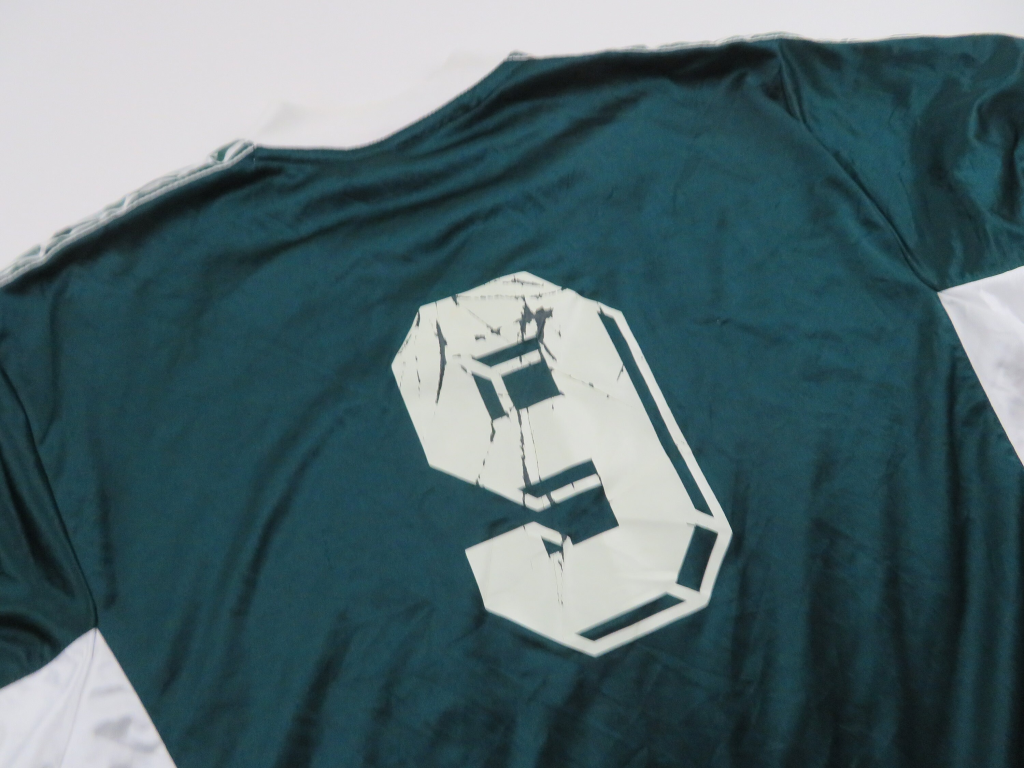
There is a specific kind of heartbreak that only a sports fan understands: pulling your favorite “grail” jersey out of the closet and noticing the corner of the number is starting to lift. Whether it’s a vintage 90s kit or a modern “Authentic” NBA jersey, heat-pressed vinyl is not immortal. Over time, friction, humidity, and most commonly improper drying cause the thermal adhesive to fail.
However, a peeling number doesn’t mean your jersey is destined for the trash. With a bit of patience and the right technique, you can perform a professional-grade restoration at home. In this guide, we will walk you through the “re-pressing” method to save your gear.
Understanding Why Jerseys Peel
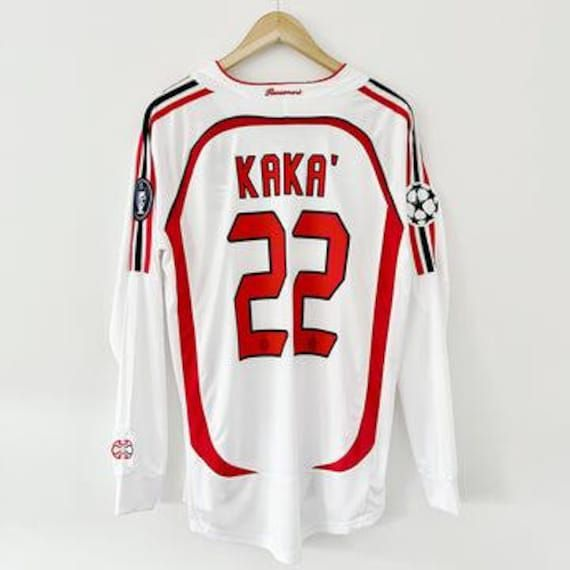
Before we jump into the fix, it is vital to understand the “why.” Most modern sports jerseys use a Heat Transfer Vinyl (HTV). This material is bonded to the polyester fabric using a heat-activated glue. This glue has a “glass transition temperature” once it gets too hot (like in a standard clothes dryer), it softens. If it softens while the jersey is tumbling, the edges pull away from the fabric.
As we discussed in our [Ultimate Jersey Care & Preservation Guide], preventing this damage is always easier than fixing it. But if the damage is already done, here is how to reverse it.
Tools You Will Need
- A Clothes Iron: Ensure it has a “Low” or “Silk” setting.
- Parchment Paper: Crucial. Do not use wax paper or aluminum foil. Parchment paper acts as a heat buffer that won’t stick to the vinyl.
- A Hard, Flat Surface: A wooden table or a firm ironing board. Do not use a soft bed or sofa, as you need even pressure.
- A Lint-Free Cloth: To clean the area before pressing.
Step 1: Clean and Prepare the Surface
Dust and body oils are the enemies of adhesive. If there is dust trapped under the peeling corner, the glue won’t rebond to the polyester.
Take a slightly damp, lint-free cloth and gently wipe the underside of the peeling vinyl and the fabric beneath it. Let it air dry completely. Do not attempt to re-press a wet jersey, as the steam generated will warp the plastic number permanently.
Step 2: Positioning the “Press”
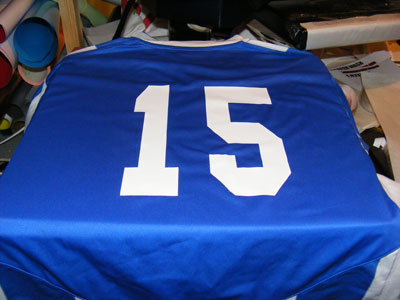
Lay the jersey perfectly flat on your hard surface. Ensure there are no wrinkles in the fabric underneath the number. If you press a wrinkle into the jersey, it may become a permanent crease.
Carefully tuck the peeling vinyl back into its original position. Once it is aligned, lay a piece of parchment paper over the entire number. The parchment paper must cover all the vinyl so the iron never touches the plastic directly. If the iron touches the vinyl, it will melt instantly, ruining the jersey and your iron.
Step 3: The “Low and Slow” Pressing Technique
Turn your iron to a Low/Synthetic/Silk setting (usually around $135^{\circ}\text{C}$ to $145^{\circ}\text{C}$). Turn off the steam setting. Steam introduces moisture that can cause the adhesive to bubble.
- The Test: Touch the iron to the parchment paper over a non-peeling area for 2 seconds to ensure the heat isn’t too high.
- The Press: Place the iron directly over the peeling corner. Apply firm, downward pressure for 10 to 15 seconds. Do not move the iron back and forth like you are ironing a shirt; this can shift the vinyl out of place.
- The Cool Down: This is the most important part. Lift the iron, but do not remove the parchment paper yet. Let the adhesive cool and “set” for at least 60 seconds.
Step 4: Inspection and Repeat
Gently peel back the parchment paper. Use a fingernail to very lightly test the edge of the number. If it still lifts, repeat the process for another 10 seconds, slightly increasing the pressure.
Sometimes, the original factory glue is completely dried out. In these extreme cases, a tiny amount of permanent fabric glue applied with a toothpick can be used before the final press, but use this as a last resort, as it can be messy.
What NOT to Do (The “Jersey Killers”)
- Do Not Use Superglue: Superglue “cures” into a hard, brittle plastic. Since jerseys need to be flexible, superglue will crack the fabric and leave a permanent white stain.
- Do Not Use High Heat: High heat will cause the polyester fabric to “scorch” or “shine,” creating a permanent mark that looks like a burn.
- Do Not Dry Immediately: After a repair, wait at least 48 hours before wearing or washing the jersey to let the bond fully cure.
How to Prevent Future Peeling
Once you have restored your jersey, you must change your maintenance habits to ensure the fix lasts. Restoration is a “second chance,” but the bond will never be quite as strong as the original factory press.
The primary reason jerseys peel is exposure to the high-heat cycles of a drying machine. To keep your numbers flat and crisp:
- Wash Cold: Keep the water
- Turn Inside Out: This prevents the numbers from rubbing against the machine drum.
- Always Air Dry: As we emphasize in our [Pillar Post on Jersey Care], air drying on a flat surface is the only way to guarantee the longevity of heat-pressed graphics.
Conclusion
A peeling number is a sign that your jersey needs a little TLC. By using the parchment paper method, you can extend the life of your favorite gear by several seasons. Remember, the value of a jersey whether emotional or financial depends on its condition. Treat your kit with the respect a piece of sports history deserves.
Next Step: Now that your numbers are fixed, make sure you aren’t making other common mistakes. Read our full guide on [The 5 Most Common Ways Fans Ruin Their Jerseys] to keep your collection in “deadstock” condition.