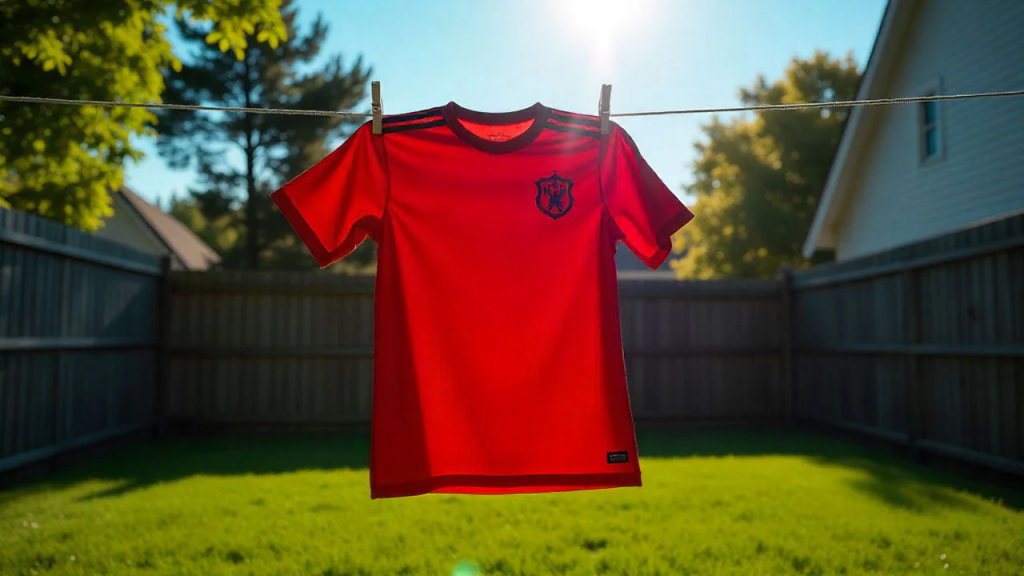
Why Preservation is a Science
In the world of sports fandom, a jersey is far more than a piece of polyester; it is a $150–$300 investment, a tangible connection to a legendary season, and for many, a family heirloom. Whether you own a game-worn relic from the 90s or a brand-new “Authentic” kit with the latest moisture-wicking technology, you are holding a high-performance piece of textile engineering.
However, the very elements that make modern jerseys lightweight and breathable polyester microfibers, heat-pressed vinyl, and silicone patches are incredibly fragile. Standard laundry habits that work for cotton t-shirts are “death sentences” for sports apparel. This is definitive guide, we will break down the molecular science of jersey care, restoration techniques, and museum-grade storage protocols to ensure your collection remains pristine for decades.
1. Polyester and Micro-Mesh
Most modern jerseys (Nike Dri-FIT, Adidas AEROREADY, Puma ULTRAWEAVE) are made from 100% recycled polyester. These fibers are designed to be “hydrophobic,” meaning they push sweat away from the body to the surface of the fabric where it can evaporate.
- The Science: High temperatures cause these synthetic fibers to “relax” and lose their shape, leading to the dreaded “bacon collar” or a stretched-out torso.
2. Heat-Pressed Vinyl (The “Swingman” Standard)
Used predominantly in NBA and NFL retail jerseys, these numbers are essentially thin sheets of plastic bonded to the fabric with thermal adhesive.
- The Risk: Adhesives have a “melt point.” Continuous exposure to warm water or dryer heat slowly dissolves this bond, leading to bubbling and eventual peeling.
3. Tackle Twill and Embroidery (The “Authentic” Standard)
Authentic on-field jerseys use “Tackle Twill,” where layers of fabric are zig-zag stitched onto the jersey. While more durable than vinyl, the stitching is prone to “pilling” and “pulling” if it encounters friction from other garments like zippers or Velcro.
The Pre-Wash Protocol: The 5 Commandments
Before you even think about turning on the faucet, you must perform these five steps. Neglecting the pre-wash is where 70% of jersey damage occurs.
1. The Inside-Out Mandate
This is the single most important rule in jersey care. By turning the jersey inside out, you protect the crests, names, and numbers from direct contact with the agitator and the abrasive surfaces of other clothes.
2. Secure All Fasteners
Zippers, buttons, and especially Velcro are “jersey killers.” A single exposed Velcro strap from a pair of gym shorts can shred the delicate mesh of a soccer kit in one cycle. Zip everything up and close all tabs.
3. The Color Barrier
Synthetic fabrics are notorious for “dye migration.” A red jersey washed with a white one will result in a pink tint that is nearly impossible to remove from polyester. Sort your laundry by color families: Darks, Lights, and Whites.
4. Stain Pre-Treatment (The Cold Approach)
If you have stadium mustard or grass stains, address them now. Use a soft-bristled toothbrush and a specialized sports detergent to gently work the area. Never use bleach. Bleach causes a chemical reaction with polyester that turns the fabric yellow.
5. Use a Mesh Laundry Bag
For “Grail” items (rare or expensive jerseys), place them in a dedicated mesh laundry bag. This provides a physical barrier against friction and prevents sleeves from getting tangled and stretched.
The Washing Masterclass: Hand vs. Machine
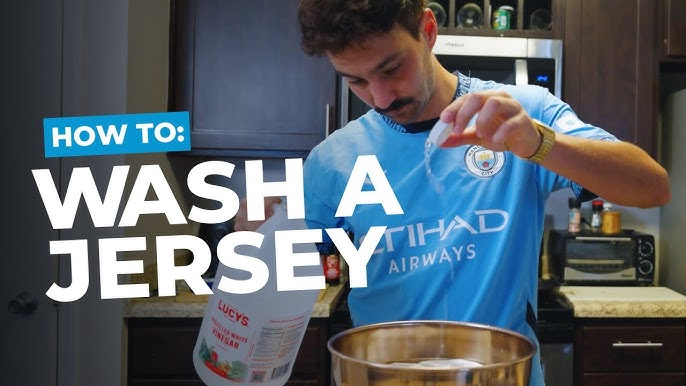
Method A: The Professional Hand Wash (Recommended)
If your jersey is older than 10 years or has a high market value, the washing machine is not an option.
- Fill a clean basin with cool water
- Dissolve the detergent: Use a “Free & Clear” detergent. Avoid anything with heavy perfumes or dyes.
- Submerge and Soak: Gently agitate the water with your hands and let the jersey soak for 20–30 minutes.
- Rinse: Use cold water. Continue rinsing until all soap suds are gone.
- The Towel Press: Do NOT wring the jersey. Lay it flat on a clean white towel, roll the towel up like a burrito, and press down to extract moisture.
Method B: The Machine Wash (The Safe Way)
If you must use a machine:
- Cycle: Select “Delicate,” “Gentle,” or “Hand Wash.”
- Temperature: Cold/Cold.
- Spin Speed: Set to the lowest possible setting (Extra Low or No Spin). High spin speeds can snap the delicate threads in embroidered patches.
The Chemical Warfare: Why Detergents Matter
Most household detergents are too aggressive for technical fabrics.
The Fabric Softener Trap
NEVER use fabric softener on a sports jersey. Fabric softeners work by coating fibers in a thin, waxy film to make them feel soft. On a jersey, this film clogs the moisture-wicking channels. Not only does this stop the jersey from “breathing,” but it also locks in body oils and bacteria, leading to a permanent “locker room” smell that no amount of washing can fix.
Enzyme-Based Cleaners
Look for “Sports Washes” (like Nikwax or HEX Performance). These are formulated to break down the proteins in sweat and grass without attacking the synthetic dyes of the jersey.
The Drying Danger Zone: Heat is the Enemy
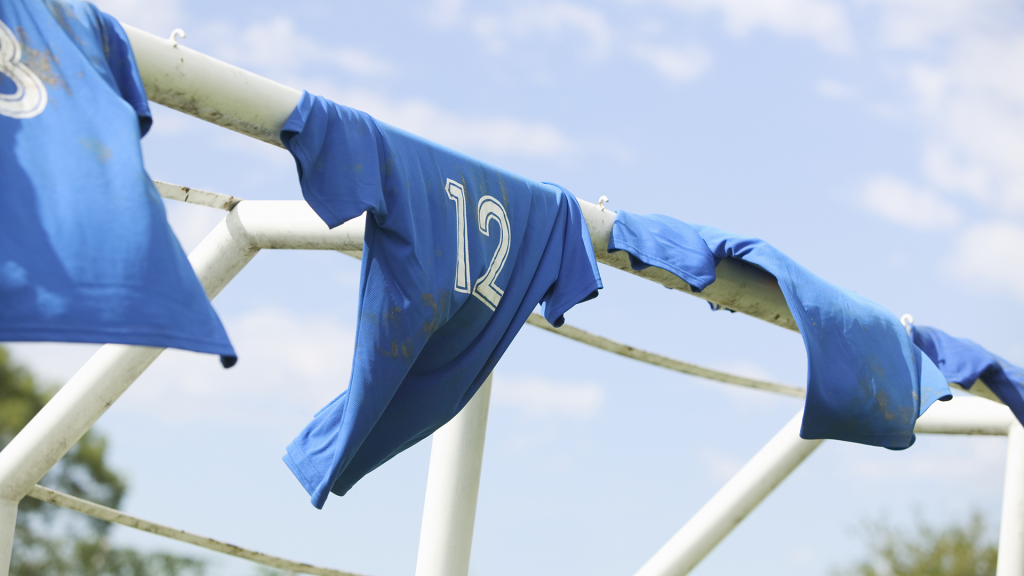
The clothes dryer is the #1 cause of jersey destruction.
Even the “Low Heat” setting on a modern dryer. This is the “Glass Transition Temperature” for many adhesives. Once the adhesive reaches this temperature, it becomes pliable. As the jersey tumbles, the numbers bend, the adhesive cools in a distorted shape, and you are left with permanent wrinkles and “bubbling.”
Proper Air-Drying Technique
- Flat Dry vs. Hanging: We recommend drying flat on a clean surface or a drying rack.
- The Problem with Hangers: When a jersey is wet, it is heavy. Hanging it on a thin wire hanger will cause “shoulder nipples” and stretch the neckline. If you must hang it, use a wide, padded hanger.
- Avoid Sunlight: Direct UV rays act as a bleaching agent on polyester. Dry your jerseys indoors in a well-ventilated area away from windows.
Troubleshooting: How to Save a “Ruined” Jersey
1. How to Fix Peeling Numbers
If the corner of a number is lifting, you can sometimes “re-press” it.
- The Technique: Place a piece of parchment paper over the peeling area. Set your iron to “Low/Synthetic” (NO STEAM). Press firmly for 5–10 seconds. The parchment paper protects the vinyl from melting while the heat reactivates the adhesive.
2. Removing “Permastink”
If your jersey smells even after washing, you have a “Biofilm” buildup.
- The Fix: Soak the jersey in a mixture of 1 part distilled white vinegar to 4 parts cold water for 60 minutes. The acetic acid in the vinegar breaks down the oils and bacteria without damaging the polyester fibers.
3. Dealing with Pilling
Small balls of fuzz (pilling) occur from friction. Use a dedicated “fabric shaver” very carefully on the lowest setting. Do not press down; let the device skim the surface to remove the pills without cutting the base fabric.
Museum-Grade Preservation & Storage
How you store your jersey when you aren’t wearing it is just as important as how you wash it.
1. The Archival Box
For long-term storage, avoid plastic bins. Plastic bins can trap moisture and release “off-gasses” that cause yellowing. Use acid-free archival boxes.
- Pro Tip: Place acid-free tissue paper between the folds of the jersey. This prevents the front and back numbers from sticking to each other during temperature fluctuations.
2. UV-Protected Display
If you frame your jersey, ensure the glass is UV-protected. Standard glass allows 90% of UV rays through, which will fade a vibrant jersey in less than two years of wall display.
3. Autograph Care
Never wash a signed jersey. Most markers are solvent-based and will “bleed” into the surrounding polyester fibers the moment they hit detergent and water. If a signed jersey gets dirty, “spot clean” only the areas away from the signature.
League-Specific Tips
- Soccer (Kits): Modern “Player Version” kits are much tighter and use heat-bonded seams instead of stitching. These are the most fragile; hand wash only.
- NFL (Jerseys): The heavy-duty “Elite” jerseys have thick tackle-twill numbers. These are prone to creasing. Store them hanging on wide, padded hangers rather than folded.
- NBA (Authentics): The mesh used in modern NBA jerseys is very open. It catches easily on jewelry or zippers. Always use a laundry bag.
Expert Insights: The Kit Manager’s Secret
We interviewed three professional kit managers from major league teams. Their consensus? “Wash less.” Unless you have sweat heavily in the jersey, you don’t need to wash it after every wear. Often, a simple “air out” in a cool room is enough. Every wash cycle is a mechanical stressor that ages the garment.
Summary Checklist for the Reader
- Inspect: Check for loose threads or stains.
- Invert: Turn the jersey inside out.
- Isolate: Place in a mesh laundry bag.
- Cold: Use cold water.
- Chemicals: No fabric softener, no bleach.
- Air: Flat dry only. No dryer ever.
Respect the Legacy
Your collection is a timeline of your life as a fan. By shifting your mindset from “laundry” to “preservation,” you ensure that the colors remain bright, the numbers remain smooth, and the memories remain vivid. The Cold-Inside-Air method is more than a set of rules; it is a commitment to the history and the investment you’ve made in your team.
Ready to grow your collection? Visit our shop tstyleclassicjerseys.com to find the latest authentic releases and put these preservation techniques into practice today.